


As a book nerd, I love asking and answering the age old question: “What’s your favorite book?” Christians inevitably respond with, “Well, besides the Bible . . .” I get that response and have used it myself. But it’s become clearer lately why it’s better not to lump the Bible into the “book” category. The Bible is more than a book. And when we understand how, it can change what happens when we read it.
Living and Active
There is a health trend of people drinking ocean plankton. One product claims to offer people raw marine phytoplankton in a concentrated form. It’s essentially microalgae—microscopic, photosynthetic organisms found in freshwater and marine environments. The idea is that you put something living inside your body to improve and maintain your health. The same principle applies to “active cultures” in probiotic yogurt, kefir, cheese, and other fermented foods. In that scenario, it’s live bacteria that improves your gut health. What’s living and active does something inside you while you’re not even aware of it.
Scripture is a living and active organism that gets inside of us and works.
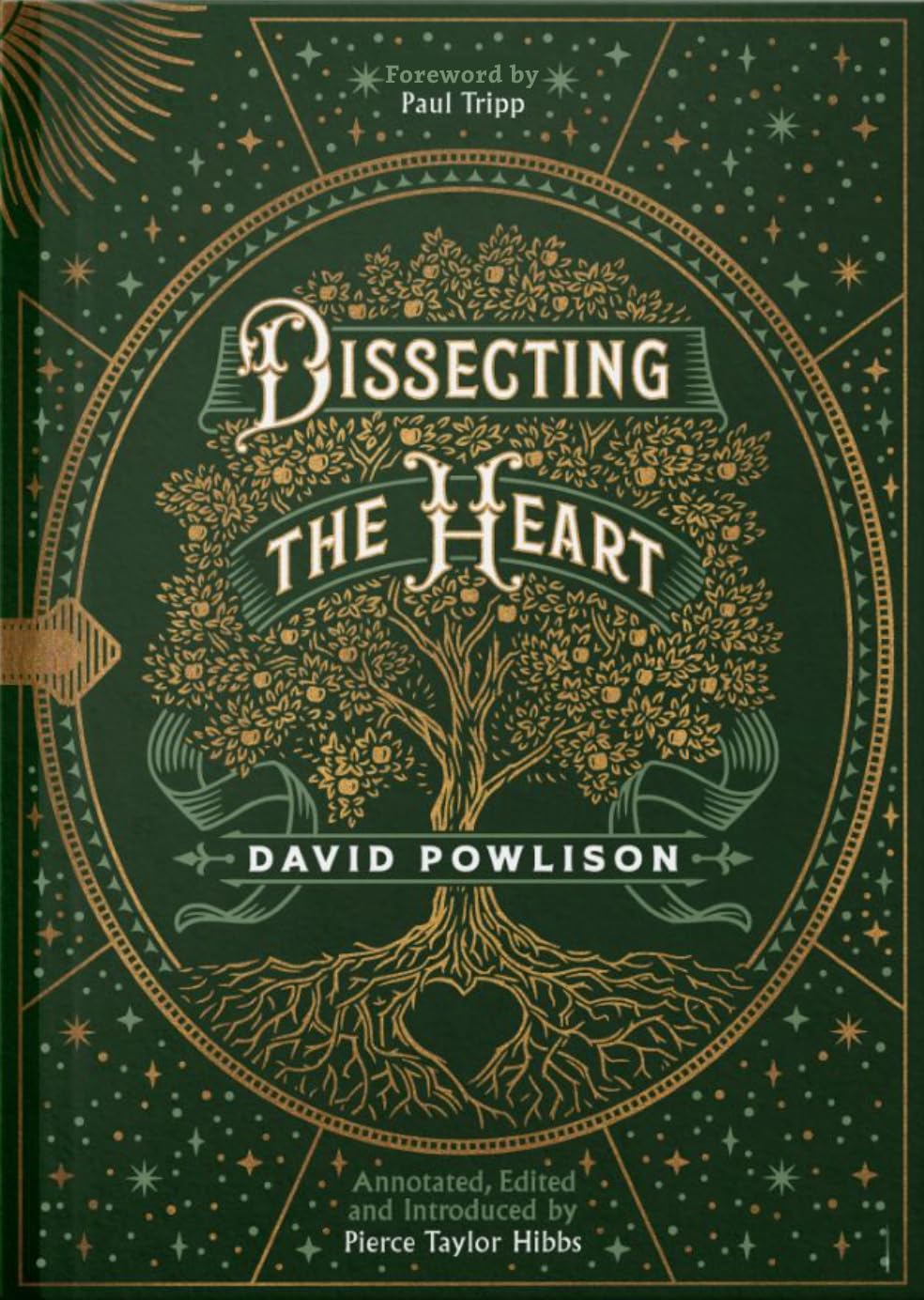
It’s striking that the writer of Hebrews describes God’s word this way: “the word of God is living and active, sharper than any two-edged sword, piercing to the division of soul and of spirit, of joints and of marrow, and discerning the thoughts and intentions of the heart” (Heb. 4:12). I’ve been steeping myself in the lectures of David Powlison lately as I finish editing and annotating a collection of his lectures (Dissecting the Heart), and here’s what he says about this passage: “What is the word of God like? First, it is alive. It is living because God himself is speaking it. Second, it is active. It’s effective. It’s doing something. It’s at work. What does it do? Well, it cuts. It’s sharper than a sword, piercing, laying things bare.” Living. Active. Working. Cutting. Exposing. That’s the word of God. It’s on a whole other level from ocean plankton, and it’s on a whole other level from every human book, too. We might even say that the word of God is “unparalleled spiritual ocean plankton.” I don’t think that phrase will be trending any time soon, but it gets at the point: Scripture is a living and active organism that gets inside of us and works.
Why It Matters
But is this anything more than a fascinating image? It is. Let me illustrate with Psalm 26, which is a psalm I’ve had a hard time getting into. Look at just the first three verses:
1 Vindicate me, O Lord,
for I have walked in my integrity,
and I have trusted in the Lord without wavering.
2 Prove me, O Lord, and try me;
test my heart and my mind.
3 For your steadfast love is before my eyes,
and I walk in your faithfulness.
At first, I think, “I don’t need any vindication. David was being chased by his enemies. I’m not really chased by anything except my own egoism and sinful longings.” But I set that aside.
I like this whole “prove me and test my heart” bit . . . for David. And for Christ, since all of Scripture is about him. Jesus, unlike me, was proved and tested constantly, and he always turned up pure. I’m so thankful for that—that I am hidden in him. But I guess I should think about what would happen if I made that request of God: “Prove me and try me; test my heart and my mind.” The plankton of God’s word starts to work. And I don’t like what drifts to the surface: vain professional ambition, egoism, lust, materialism, one-upmanship, distraction, gluttony for caffeine, for sugar, for pretty much anything. “My God,” I say to myself. “I am not David, pleading in a holy fear before you. And I am certainly not Christ, always tried and true and blindingly bright. I really need help.” I am being pursued not only by my besetting sins, but by a lion who is treading the grass outside my window and waiting to devour me (1 Pet. 5:8). It turns out I do need vindication from an enemy. I’m closer to David than I thought.
I pause to pray. I needed to voice what was in my heart and mind. But I wouldn’t have without the living and active word working inside me, calling me to confession. The active word activates repentance.
Verse 3 is hard to process, given what I just confessed. But now I’m more aware of Christ and his life-giving Spirit than I was before. On my own, my heart wanders like a vagrant, looking for people and places to plunder. But in Christ, in him, my sins are covered: past, present, and future. It’s because of him that God’s steadfast love is before my eyes.
And then it hits me: apart from God’s love in Christ, I’m blind. The goodness and steadfastness of God that I see is a gift of perception from God’s own Spirit, extended through the Son. God’s love is before my eyes because Christ is before my eyes. Right now. I don’t see him, but I’m seeing through him. He is the answer to the hymn “Be Thou My Vision.” I had no idea that the Son of God was before my very eyes. The plankton is swarming, first bringing confession and then bringing holy joy and spiritual sight.
“I walk in your faithfulness” now takes on new meaning. David tried (and failed) to walk in faithfulness. Christ did it perfectly. And me? I’m walking inside him. “Put on the Lord Jesus Christ, and make no provision for the flesh, to gratify its desires” (Rom. 13:14). “As many of you as were baptized into Christ have put on Christ” (Gal. 3:27). I put him on. I wrap myself in Jesus. I am blanketed by a divine person. I walk in his faithfulness. “God,” I say aloud, “this is so much better than pretending I’m okay on my own.”
I’m only three verses into the psalm, but the living and active word has already moved, cut, worked, and exposed. But, thank God, it has also healed and encouraged. Books do not do this, even if they inspire us or bring us joy or enrapture us in taletelling. Scripture is different. It is more than a book.
What Next?
All of this changes how we read the Bible each day. We often read other books for information or entertainment. They enhance our perspective or develop our thinking. That’s all well and good. But Scripture does something different. When we open the Bible, we are about to consume unparalleled spiritual ocean plankton. Something living and active is going to enter us. What will it do? How will it cut? Where will it mend?
Think about flipping around a question for your devotions. Instead of saying, “What passage will I read this morning?” we can ask, “What passage will read me?” Reading the word of God is always a confrontation, always a cutting, always a project of active engagement—not because of what we do with it but because of what it is. The word of God is living and active. Always. Even when we’re unaware of the movement, it’s happening. Just as microalgae and bacteria work inside us without our knowing, God’s word affects our insides, often taking us by surprise. It lays us bare before the piercing vision of God. But it does not leave us there. By the Spirit, the word cuts, but it also mends.
The next time someone asks you what your favorite book is, don’t put the Bible in that category. And if someone asks you why you didn’t, you can tell them: “The Bible is not a book. It’s unparalleled spiritual ocean plankton.” They may look at you funny, but it will give you the chance to explain how the word has been working inside you.

.jpg)

.jpg)
.jpg)